

Corrosion-Resistant Super Duplex Tube Manufacturer
Super duplex tubes are a high-performance class of stainless steel tubes known for their higher strength and high corrosion resistance. Super duplex stainless steel tubes are made by utilizing super duplex stainless steel with a controlled mix of austenitic and ferritic phases in the microstructure. This two-phase structure grants the material better mechanical strength and greater resistance to several forms of corrosion, including pitting, crevice corrosion, and stress corrosion cracking resistance that plain carbon steel simply cannot match.
Super duplex tubes have wide use in harsh environments, such as offshore platforms, desalination facilities, and chemical plants. Super duplex tubes offer nearly double the strength compared to common stainless steels like grades 304 and 316, and far outperform carbon steel in chloride-rich service. Moreover, these tubes offer good toughness at sub-zero temperatures, making them reliable in diverse conditions. They also exhibit weldability and long lifespan, thus suitable for applications in pressure vessels and heat exchangers across power generation and electric power generation plants.
Two grades dominate this space: 2205 duplex stainless steel tubing for standard duty and 2507 super duplex tubing for the harshest offshore and chemical environments. Whether you need 2205 tubing for general process lines or 2507 tubing for subsea or high-chloride service, both outperform carbon steel and conventional 2205 stainless steel tubing alternatives on corrosion life.
Where is Super Duplex tube used?
Oil & Gas Industry – Subsea pipelines, heat exchangers, umbilical tubing, injection and production systems, offshore platforms (topsides, risers).
Marine & Shipbuilding – Seawater cooling systems, water systems, marine shafts and tubing.
Desalination & Water Treatment – Reverse osmosis (RO) plants, brine heaters, high-pressure water tubing.
Chemical & Petrochemical Plants – Tubes in chemical reactors, heat exchangers and condensers, transport of acidic and caustic fluids a common upgrade path from carbon steel in aggressive chemical plants.
Power Generation – Boiler tubing, flue gas desulfurization units, cooling water systems in both conventional and electric power generation facilities.
Instrumentation & Control Systems – Hydraulic and pneumatic tubing, process measurement and control lines.
How do Super Duplex Tubes perform in corrosion resistance compared to other piping materials?
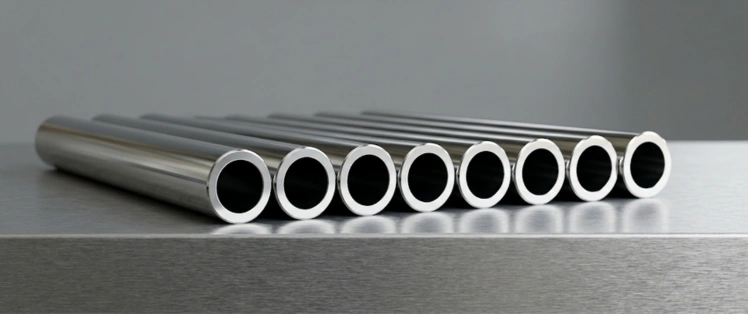
Super Duplex Stainless Steel (e.g. UNS S32750, S32760)
- Excellent resistance to:
- Pitting corrosion and crevice corrosion, particularly in chloride-rich environments (e.g. seawater around offshore platforms).
- Stress corrosion cracking (SCC), especially better than austenitic stainless steels.
- High PREN (Pitting Resistance Equivalent Number):
- Typically >40, which is significantly higher than many other stainless steels and far above carbon steel.
Comparison with Other Materials:
- Austenitic Stainless Steel (e.g., 316L)
- Lower corrosion resistance than Super Duplex, especially in chlorides.
- More prone to SCC and pitting.
- Standard Duplex Stainless Steel (e.g., 2205)
- Good resistance, but Super Duplex outperforms in harsher conditions.
- PREN of Duplex (including 2205 duplex stainless steel tubing) is usually around 35.
- Carbon Steel
- Very poor corrosion resistance without coatings or linings.
- Not suitable for marine, offshore platforms, or chemical plants without protection this is exactly where super duplex tube replaces carbon steel.
- Nickel Alloys (e.g., Inconel, Hastelloy)
- Can match or exceed Super Duplex in some environments (especially highly acidic or reducing).
- Much more expensive, so Super Duplex is often used as a cost-effective alternative to nickel alloys in marine, oil & gas, and chemical plants.
Do Super Duplex Tubes offer good weldability and fabrication properties?
Yes, Super Duplex tubes offer good weldability and fabrication properties, especially when proper procedures are followed. Due to their dual-phase microstructure comprising both austenite and ferrite Super Duplex stainless steels require careful control of heat input and interpass temperatures during welding to maintain the optimal phase balance and avoid the formation of detrimental intermetallic phases such as sigma phase. With the right techniques, such as using suitable filler materials and post-weld cooling practices, high-quality welds with excellent mechanical and corrosion-resistant properties can be achieved welds that hold up in power generation and offshore platforms settings far better than carbon steel.
In terms of fabrication, Super Duplex tubes exhibit good machinability and formability, although they are generally tougher to work with than austenitic stainless steels or carbon steel due to their higher strength. Specialized tools and slower machining speeds are often recommended to ensure precision and reduce tool wear. Despite these considerations, Super Duplex stainless steel remains a reliable and widely used material for demanding applications, offering a strong combination of weldability, corrosion resistance, and mechanical performance when fabricated correctly.