
Duplex & Super Duplex Round Bar: Grades, Specs & Applications
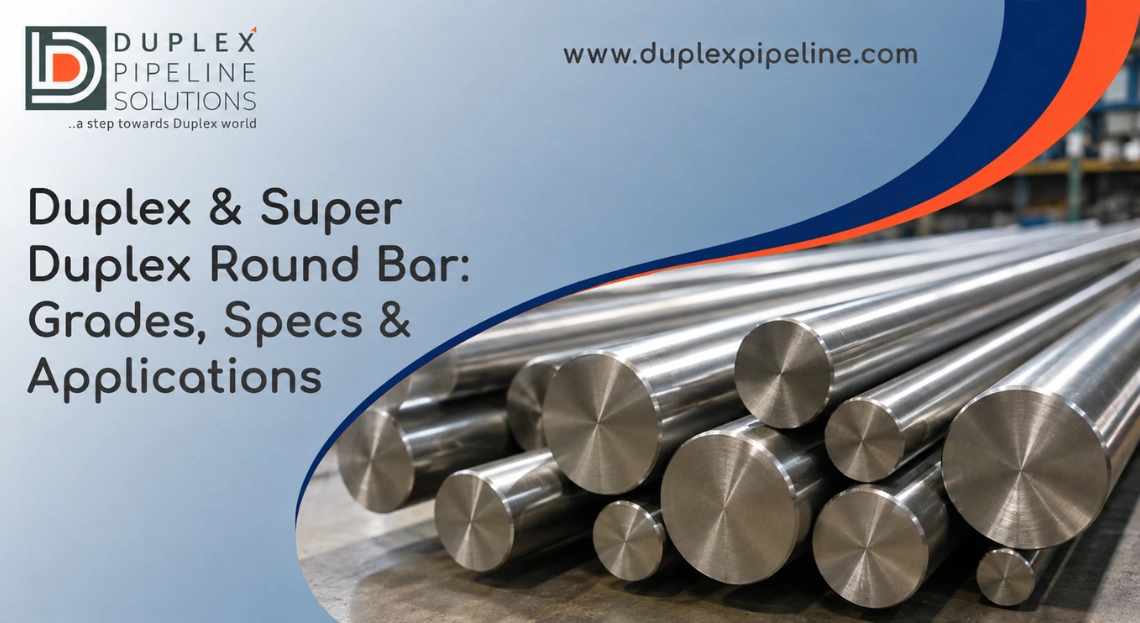
Duplex & Super Duplex Round Bar: Grades, Specs & Applications
Round bar doesn’t get the attention that pipe and plate do, but it sits behind some of the most critical components in any high-corrosion project. Every forged flange, every bolt, every pump shaft that needs to survive years in seawater or sour service starts life as a length of round bar. When that bar is duplex or super duplex stainless, it’s usually because the finished part often a fastener, a flange, or a fitting has to outlast standard austenitic material in an environment that punishes weaker alloys.
This guide covers the grades, specifications, and real-world applications buyers should understand before ordering duplex or super duplex round bar for their next project.
What Is Duplex and Super Duplex Round Bar
Duplex stainless steel gets its name from its two-phase microstructure roughly equal parts austenite and ferrite which gives it noticeably higher strength than single-phase austenitic grades like 304 or 316, along with better resistance to pitting, crevice corrosion, and stress corrosion cracking. Round bar produced in duplex or super duplex grades is used as raw stock for machining and forging components that need that combination of strength and corrosion resistance in solid form, rather than as tube or pipe.
Super duplex takes this further with higher chromium, molybdenum, and nitrogen content, pushing corrosion resistance well beyond what standard duplex or conventional stainless steel pipe can offer. It’s the material of choice when a component will sit in direct seawater contact or high-chloride process fluid for decades without realistic access for replacement.
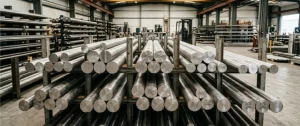
Common Duplex and Super Duplex Grades
Buyers sourcing round bar will most often encounter these grades:
Standard Duplex — UNS S32205 / S31803
The workhorse duplex grade, offering a strong balance of cost and performance for general offshore and marine engineering applications, including bolting, shafts, and mid-range flange forgings.
Super Duplex — UNS S32750 / S32760
Higher alloy content makes this grade suitable for the most aggressive chloride environments, including deep subsea equipment, critical fasteners, and components exposed to continuous seawater flow.
Lean Duplex — UNS S32101
A lower-nickel alternative used where moderate corrosion resistance is sufficient, often chosen for cost-sensitive projects that still need better performance than standard stainless steel pipe fittings can provide.
Key Specifications Buyers Should Check
Round bar orders live or die on the details in the specification sheet. Before placing an order, confirm the following.
Chemical Composition
Duplex and super duplex round bar should meet the chemistry ranges defined in ASTM A276 or A479, with particular attention to chromium, molybdenum, and nitrogen content, since even small deviations affect corrosion performance in seawater and sour service.
Mechanical Properties
Look for confirmed yield strength, tensile strength, elongation, and impact toughness values, particularly if the round bar will be machined into fasteners or forged into flanges that carry structural load.
Testing and Certification
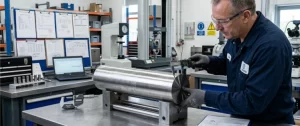
Reputable suppliers provide mill test certificates covering chemical analysis, mechanical testing, and — for critical offshore work — NACE MR0175 compliance and third-party inspection reports before the material ships.
Applications Across Industries
Duplex and super duplex round bar shows up wherever a solid, machinable, corrosion-resistant material is needed rather than tube or pipe.
Steel Flanges and Fasteners
This is where round bar earns its keep. Forged steel flanges are typically produced from round bar billet rather than plate, giving the finished flange better grain flow and mechanical integrity at the bolt circle. Bolting hardware — studs, bolts, and nuts — is machined directly from round bar stock, and specifying duplex or super duplex fasteners to match duplex flanges and pipe avoids the galvanic mismatch that causes premature joint failure. Any project specifying duplex steel pipe should specify matching steel flanges and bolting from the same alloy family, not a generic commercial grade.
Marine Engineering and Offshore Structures
Round bar feeds directly into marine engineering fabrication — propeller shafts, rudder stocks, mooring hardware, and structural pins that need both strength and long-term corrosion resistance in a saltwater environment. Marine engineering teams increasingly specify duplex round bar over standard stainless for exactly the same reasons they specify duplex over ordinary stainless steel pipe in piping systems.
Heat Exchanger and Process Equipment Components
Beyond tube sheets and shells, heat exchanger assemblies often need machined studs, valve stems, and instrument fittings sourced from round bar. Where the surrounding ss tube and shell material is duplex, matching the smaller machined components to the same grade keeps the whole heat exchanger assembly chemically consistent and reduces the risk of localized corrosion at dissimilar-metal joints.
Round Bar vs Pipe and Tube: When Each Is Used
It’s worth being clear about the distinction, since buyers occasionally conflate the two. Steel pipe and ss tube are hollow products used to convey fluid — the backbone of any piping system. Round bar is solid stock used for machining, forging, and fabrication. A project sourcing duplex material typically needs both: steel pipe or ss tube for the flow path, and round bar for the flanges, bolting, and structural hardware that connect and support it. Ordering mismatched grades between the two — say, standard stainless steel pipe paired with commercial-grade hardware — undermines the corrosion resistance the pipe was specified for in the first place.
A Buyer’s Checklist Before Ordering Round Bar
- Confirm the exact UNS grade required (standard duplex, super duplex, or lean duplex) based on the project’s corrosion and mechanical requirements.
- Request mill test certificates covering chemistry, mechanical properties, and any required NACE compliance.
- Match round bar grade to the connecting steel pipe or ss tube system to avoid galvanic mismatch at flanges and bolted joints.
- Verify machinability and heat treatment condition if the bar will be forged or heavily machined.
- Confirm diameter tolerances and surface finish requirements against the intended end use, whether that’s a flange forging or a fastener blank.
- Compare lead times across suppliers, since super duplex round bar often has longer mill lead times than standard grades.
Final Thoughts
Round bar rarely gets the spotlight, but it’s the raw material behind some of the most stressed components in any duplex system — the flanges, fasteners, and machined parts that hold a project’s steel pipe and ss tube network together. Choosing the right duplex or super duplex grade, backed by proper mill certification, is what keeps those connection points as durable as the piping they support.
At Duplex Pipeline, we supply duplex and super duplex round bar alongside matching steel flanges, fasteners, steel pipe, and heat exchanger components for marine engineering and offshore projects. Reach out for current grade availability and mill certification details for your next order.