
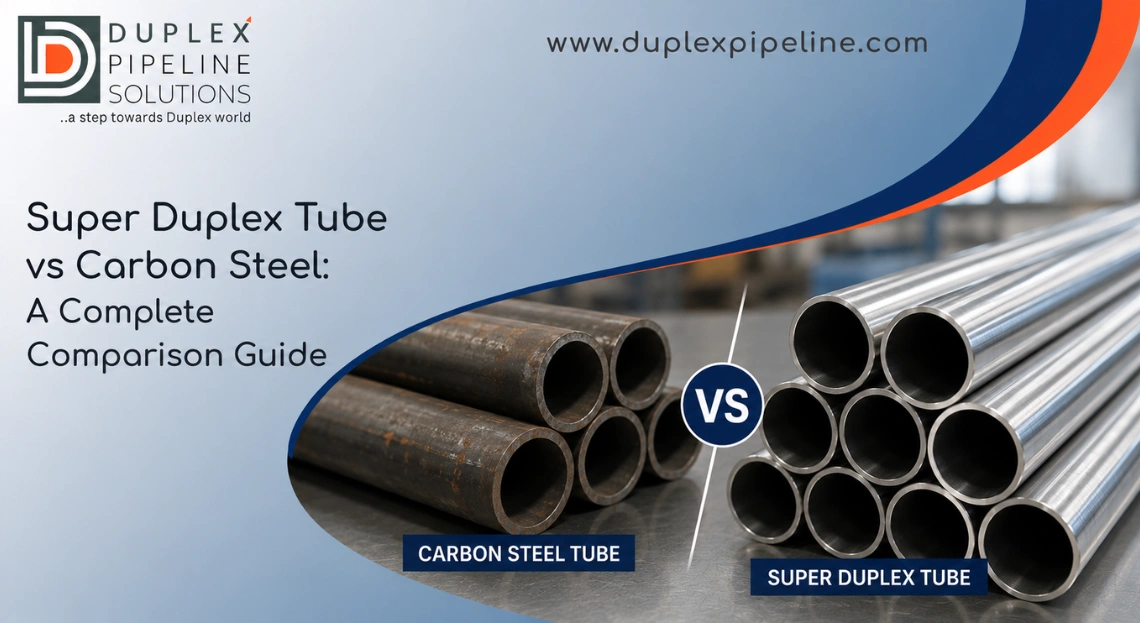
Super Duplex Tube vs Carbon Steel: A Complete Comparison Guide
Super Duplex Tube vs Carbon Steel: A Complete Comparison Guide
If your project currently specifies carbon steel tubing for a chemical plant, offshore platform, or power generation system, it’s worth checking whether that choice will actually survive the operating environment. That grade offers very poor corrosion resistance without coatings or linings and is generally unsuitable for marine or chemical applications without added protection. Super duplex tube, by contrast, is built from a dual-phase austenitic-ferritic stainless steel that delivers nearly double the strength of standard 304/316 grades along with outstanding resistance to pitting, crevice corrosion, and stress corrosion cracking all without relying on a coating to do the work. This guide compares super duplex tube against the alternatives so you can specify the right material the first time.
What Is Super Duplex Tube, and How Does It Compare to Carbon Steel?
Super duplex tube by Duplex Pipeline Solutions is manufactured from super duplex stainless steel, using a controlled mix of austenitic and ferritic phases in its microstructure. This two-phase structure gives the tube better mechanical strength and greater resistance to pitting, crevice corrosion, and stress corrosion cracking than either standard duplex or austenitic stainless steel. Where less resistant grades need external coatings or linings just to hold up in a corrosive environment, super duplex tube resists that same corrosion at the material level.
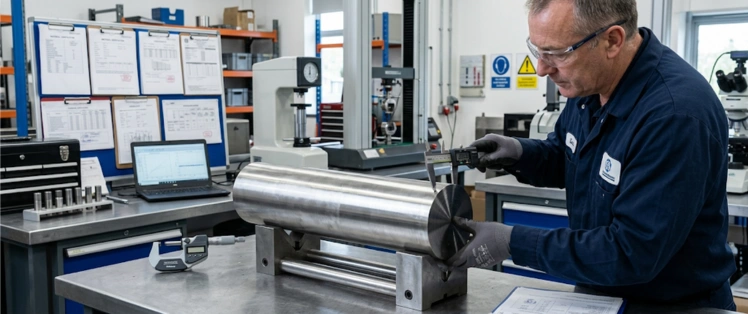
Carbon Steel vs Super Duplex: A Materials Comparison
Here’s how super duplex tube stacks up against the alternatives commonly considered for demanding tubing applications:
- Carbon steel – very poor corrosion resistance without coatings or linings; not suitable for marine or chemical applications without protection
- Austenitic stainless steel (e.g., 316L) – lower corrosion resistance than super duplex, especially in chloride-rich conditions, and more prone to stress corrosion cracking and pitting
- Standard duplex stainless steel (e.g., 2205) – good resistance, with a Pitting Resistance Equivalent Number (PREN) of around 35, but super duplex outperforms it in harsher conditions
- Super duplex stainless steel (e.g., UNS S32750, S32760) – typically exceeds a PREN of 40, offering excellent resistance to chloride-rich environments like seawater
- Nickel alloys (e.g., Inconel, Hastelloy) – can match or exceed super duplex in highly acidic or reducing environments, but at a significantly higher cost, which is why super duplex is often chosen as the more cost-effective alternative
Applications: Power Generation, Chemical Plants & Offshore Platforms
Super duplex tube is used across industries where a less resistant metal would corrode too quickly to be reliable:
- Power generation – boiler tubing, flue gas desulfurization units, and cooling water systems where standard tubing would need constant maintenance
- Chemical plants – tubes in chemical reactors, heat exchangers, condensers, and the transport of acidic and caustic fluids
- Offshore platforms – subsea pipelines, umbilical tubing, injection and production systems, and topside piping exposed to constant salt spray
- Marine & shipbuilding – seawater cooling systems and marine shafts
- Desalination & water treatment – reverse osmosis plants, brine heaters, and high-pressure water tubing
- Instrumentation & control systems – hydraulic, pneumatic, and process measurement lines
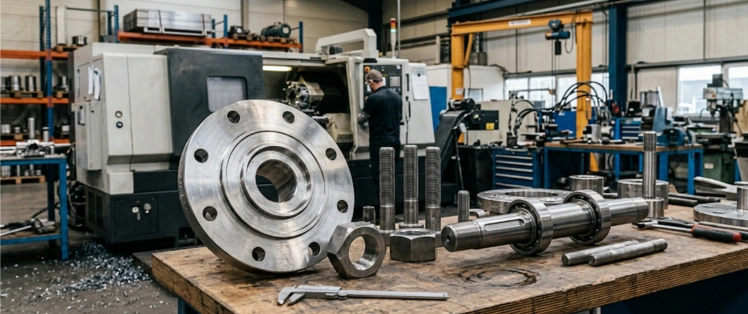
Corrosion Resistance: Why Super Duplex Outperforms Standard Materials
Super duplex stainless steel offers excellent resistance to pitting and crevice corrosion, particularly in chloride-rich environments such as seawater, along with strong resistance to stress corrosion cracking an area where less corrosion-resistant metals and even austenitic stainless steels tend to fall short. With a PREN typically above 40, super duplex tube is engineered specifically for the environments where a lower-grade material would need frequent inspection, coating renewal, or early replacement.
Weldability & Fabrication
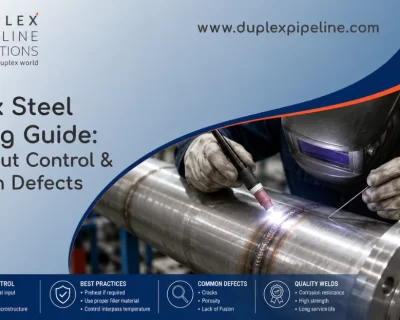
Super duplex tube offers good weldability and fabrication properties when proper procedures are followed. Because the dual-phase microstructure combines austenite and ferrite, welding requires careful control of heat input and interpass temperatures to maintain phase balance and avoid intermetallic phases such as sigma phase. In fabrication, super duplex tube is tougher to machine than austenitic stainless steel due to its higher strength, so specialized tools and slower machining speeds are recommended but the payoff is a tube built for decades of service in electric power generation, chemical, and offshore environments.
Why Choose Duplex Pipeline Solutions Over Carbon Steel Suppliers
- Exceptional corrosion resistance where carbon steel and coated alternatives fall short
- Good weldability and fabrication support
- Built for harsh environments across power generation, chemical plants, and offshore platforms
- High mechanical strength with consistent quality assurance